Somewhere in the next few hours you will hit a moment of low-grade pressure. An email that tightens your chest. A meeting that runs hot. A stretch of traffic, a hard conversation, a wave of being simply too far behind. And in that moment you will reach, as we all do, for something: the phone, the snack, the fourth coffee, the held breath and clenched jaw.
You will almost certainly not reach for the one tool that is always with you, costs nothing, works in under two minutes, and is wired directly into the system that governs how stressed you feel. You will forget to breathe on purpose. Almost everyone does. It is the most available reset there is, and the most consistently overlooked.
Why breath has the keys
Most of what your body does runs automatically and below your conscious control. Your heart rate, your digestion, the tightening and loosening of your stress response: you do not get a manual dial for any of it. Breathing is the strange and useful exception. It happens on its own, but you can also take the wheel any time you choose. That makes the breath a rare direct line into systems you otherwise cannot touch.
The lever that matters most is the exhale. A slow, long out-breath is one of the clearest signals you can send your nervous system that it is safe to down-shift, to move out of the keyed-up state and toward calm. You do not need to understand the mechanism to use it. You need to make the exhale slow and the breath low, into the belly rather than high in the chest, and let your body read the signal.
Breathing is the one automatic system you can also drive. That makes the breath a direct line into the parts of you that stress otherwise runs without asking.
The two-minute practice
Here is a version simple enough to actually use when you need it, which is the only kind that counts.
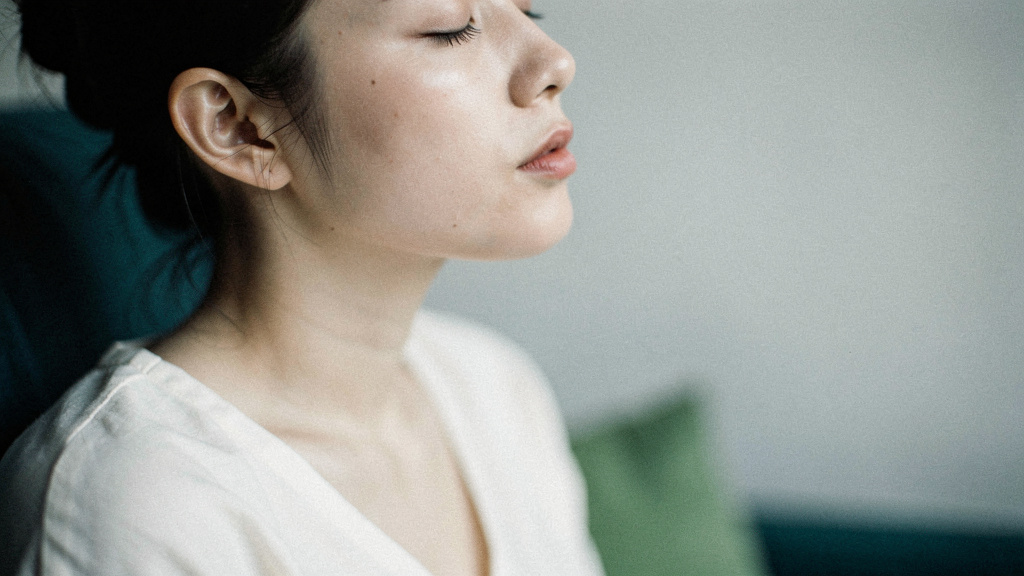
Sit or stand, wherever you are. Let the shoulders drop. Breathe in gently through the nose for a count of about four, low into the belly so it expands rather than your chest. Then breathe out slowly, through the nose or softly through the mouth, for a count of about six, longer than the in-breath. That longer exhale is the whole point. Repeat for six to ten rounds, which takes roughly two minutes.
That is it. No app, no special posture, no one needs to know you are doing it. You can run it at your desk, in the car before you walk in, in the few seconds before a hard conversation. The slow, extended exhale, repeated a handful of times, is usually enough to take the edge off and bring you back to something like even.
Use it before you need it
The deeper move is to stop treating breath as a fire extinguisher you only grab in the emergency. A couple of minutes of slow breathing woven into ordinary moments, before you start the day, between tasks, as you wind down at night, keeps your baseline calmer, so the spikes have less far to climb.
The tool was always there. It is the first thing you ever did and the last thing you will do, and in between you mostly leave it on autopilot. Take the wheel now and then. Two minutes, a long exhale, and you are back. For something so small, it is a remarkable amount of control over how the day feels.