

A hormone panel comes back, and one line reads estradiol. For most people the word registers as a female hormone and nothing more, filed somewhere next to periods and pregnancy. That undersells it. Estradiol also touches bone density, cholesterol handling, blood sugar, mood, and memory, in men as well as women, which is why the number is worth understanding on its own terms.
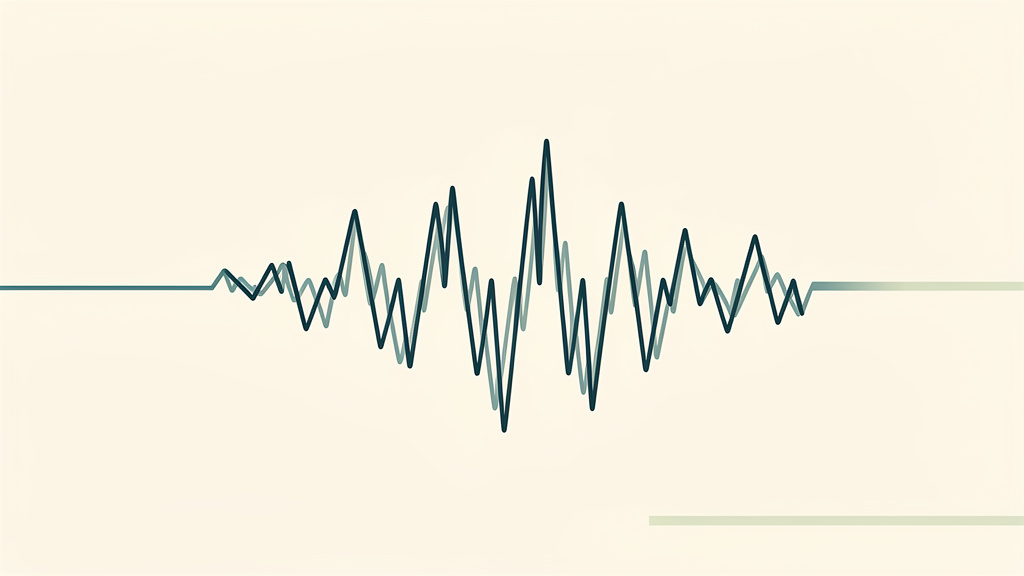
The more useful thing to understand about estradiol, though, is not just what it does. It is how it behaves right before it disappears. In the years leading up to menopause, estradiol does not fade quietly. It swings, sometimes further than it ever did during the reproductive years, before it finally settles low. That swing is the part most explanations skip, and it is the part that makes a single lab result so easy to misread.
What estradiol actually does
Estrogen is not one hormone but a small family of them, and estradiol is the one that matters most for most of adult life. Estradiol, also called E2, is the main estrogen in nonpregnant women of childbearing age. It is mostly made in the ovaries, helps release an egg each menstrual cycle, thickens the uterine lining, and supports brain and bone health. Males make small amounts of it in the testicles. Its relatives fill in around the edges: estrone is the weakest of the three and is made mostly by body fat and the adrenal glands, and it is the only estrogen women continue to make after menopause, while estriol rises during pregnancy and is made in the placenta.
Estradiol's reach goes well past reproduction. Estrogens more broadly help maintain healthy cholesterol and blood sugar levels, bone and muscle strength, and brain functions such as focus. That is why a low reading can show up as more than a missed period. It can show up as a change in mood, sleep, or how a workout feels.
The rhythm it keeps during the reproductive years
Before perimenopause begins, estradiol does not sit at one number. It moves in a predictable monthly pattern, low at the start of the cycle, rising toward ovulation, and dipping again before the next period. That rhythm is normal, which is exactly why a single reading in a reproductive-age woman means very little without knowing where in the cycle it was drawn. Because levels change so often, a provider often needs more than one test to see a real trend rather than a single point in a moving pattern.
That same logic, that one snapshot rarely tells the whole story, matters even more once the cycle itself starts to break down, which is what happens in perimenopause.
Why perimenopause turns the rhythm into a rollercoaster
The hormonal changes of perimenopause trace back to declining estrogen. As estrogen decreases, it throws off the long-standing balance with progesterone, another hormone the ovaries produce, and hormone levels swing up and down like a rollercoaster rather than declining in a straight line.
The mechanism behind that rollercoaster is a feedback loop working overtime. As the number of viable ovarian follicles declines with age, the brain compensates by producing more of the hormones that try to drive follicle development. That compensation can push estradiol to levels higher than anything seen during the regular reproductive years, before it eventually falls for good. Prior to the complete loss of ovarian follicles, consistently increased FSH can drive estrogen synthesis to levels many times higher than ever seen in a normal cycle, and a meta-analysis of more than a dozen studies shows perimenopausal estradiol levels are often significantly higher than those seen during peak reproductive years.
The practical result is that perimenopause does not look like a slow, steady decline on a chart. Levels become less predictable and can rise and fall more steeply and more often than they did during the reproductive years, which is part of what produces hot flashes, night sweats, and irregular periods. Estradiol is so erratic during this stretch that most labs do not even publish an established normal range for it.
Why a single test rarely settles the question
Given how much estradiol moves during this transition, it is tempting to want a blood test to simply confirm that perimenopause has started. The clinical guidance runs the other way: hormone testing is not necessary to diagnose perimenopause, because levels fluctuate so much that the tests are not considered reliable on their own.
That does not make hormone tests useless, only secondary. FSH testing can suggest perimenopause is beginning, but it can also mislead, since FSH itself rises and falls erratically during this window. Instead, most diagnoses rest on a simpler picture: in roughly three out of four women, symptoms begin during the expected age range and a doctor can identify perimenopause from history and symptoms alone, no lab work required. Testing tends to get reserved for the unclear cases, such as symptoms starting well before the expected age, or after a hysterectomy removes the usual signal of a missed period.
What actually falls with it
Menopause itself is defined without any lab work at all: it is confirmed once a woman has gone twelve consecutive months without a period. The runway to that point can be long. Perimenopause typically begins eight to ten years before menopause, usually in the mid-40s though sometimes earlier, and averages about four years, occasionally stretching to eight.
Once the transition completes and estradiol settles at its new, much lower baseline, the effects extend past the reproductive system. Estrogen helps preserve bone, so its decline raises the risk of osteoporosis and fracture. The transition also carries a higher risk for heart disease. Even the most familiar symptom traces back to the same drop: a hot flash is a sudden, sweat-inducing warmth caused by low estrogen, and it can persist for months or years.
Where testing still earns its place
None of this makes an estradiol test pointless, only narrower in purpose than confirming a life stage. Estradiol and estrone testing help diagnose conditions such as early or late puberty, polycystic ovary syndrome, thyroid or pituitary disorders, infertility, and certain estrogen-producing tumors, and they help monitor infertility treatment, hormone therapy, and hormone-sensitive cancer treatment. Those are the situations where a number, tracked over time rather than read once, actually changes what a clinician does next.
Testing methods vary, too. At-home kits can measure estrogen from a saliva sample, but any result still needs a clinician's interpretation. The instrument matters less than what happens after: in a hormone this variable, a single number is a data point to bring into a conversation, not a verdict to read alone.
Common questions
Is a low estradiol reading always a sign of perimenopause?
No. Estradiol and estrone testing can also point to early or late puberty, polycystic ovary syndrome, thyroid or pituitary disorders, or infertility, so age and the full symptom picture matter as much as the number itself. A low or unusual reading in a younger woman calls for a different conversation than the same reading in a woman in her late 40s.
Can a blood test tell me for certain that I'm in perimenopause?
Not reliably on its own. Hormone testing is not necessary to diagnose perimenopause, because levels fluctuate so much that the tests are not considered reliable. Most diagnoses rest on age, menstrual pattern, and symptoms, with lab work reserved for cases where that picture is unclear.
What counts as a normal estradiol level?
There is no single answer, and during perimenopause the concept barely applies. Reference ranges vary by lab and by the test method used, and there is no standardized range the way there is for blood pressure or cholesterol. A result is only meaningful next to the lab's own range and a clinician's read of the full picture.
Does a falling estradiol level only affect periods and hot flashes?
No. Estrogen helps preserve bone, so its decline raises the risk of osteoporosis and fracture, and the transition also carries a higher risk for heart disease and other cardiovascular conditions. The reproductive symptoms are the most noticeable part of the story, not the whole of it.
If my labs look normal but I don't feel like myself, does that mean nothing is wrong?
Not necessarily. Estradiol during perimenopause can be normal one week and far outside that range the next, so one reassuring result does not rule out a real transition already in progress. Symptoms and a trend across repeated tests, read together with a clinician, tell a fuller story than any single draw.