
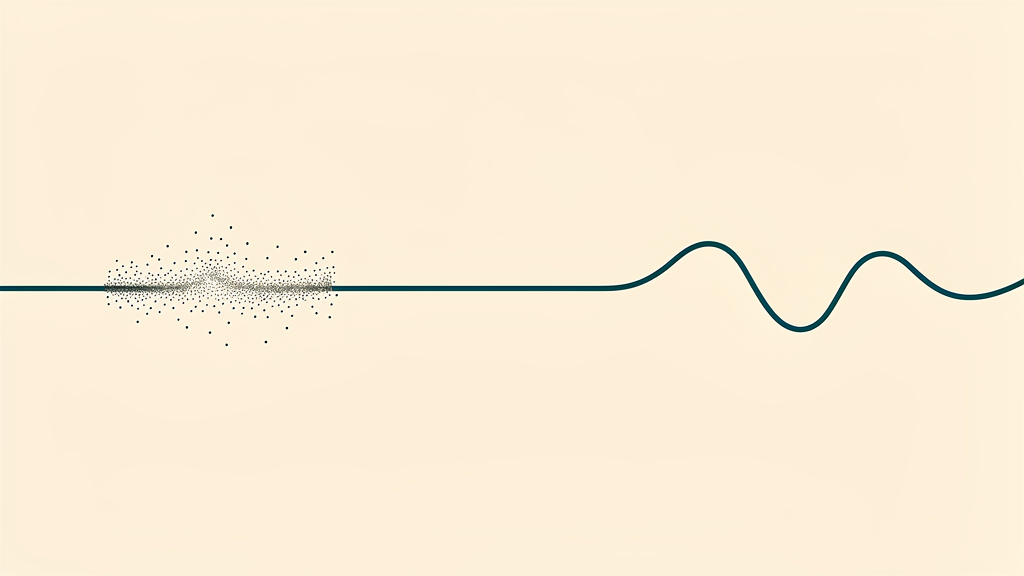
A normal TSH result gets read as a verdict: the thyroid is fine, close the file. But TSH measures the output of a long feedback loop between the brain and the gland, and it only moves once that loop has already lost ground. Thyroid antibody tests ask a different, earlier question: has the immune system started attacking the thyroid at all, whether or not the hormone numbers have noticed yet.
What the test actually looks for
Antibodies are proteins the immune system makes to fight off bacteria and viruses. In autoimmune disease, the same machinery mistakenly targets the body's own tissue instead, producing what's called an autoantibody. According to MedlinePlus, if antibodies attack the thyroid, they can drive two very different diseases: Hashimoto's disease, the most common cause of an underactive thyroid, and Graves' disease, the most common cause of an overactive one.
A thyroid antibody panel can include several distinct markers, each with its own target and its own meaning. Cleveland Clinic lists the main ones: thyroid peroxidase antibodies (TPOAb), thyroglobulin antibodies (TgAb), thyroid-stimulating hormone receptor antibodies (TRAb), and thyroid-stimulating immunoglobulin (TSI). They are not interchangeable, and a provider chooses which ones to order based on the clinical picture rather than running all four by default.
Two opposite directions
The antibodies split into two families that point in opposite directions. TPO and thyroglobulin antibodies are associated with tissue destruction: TPO targets thyroid peroxidase, the enzyme the gland uses to build hormone, and thyroglobulin antibodies target the protein that stores it. Mayo Clinic explains that in Hashimoto's disease, the immune system mistakenly targets thyroid peroxidase, causing inflammation that can leave the gland less able to do its job over time.
TRAb and TSI work the opposite way, binding to the same receptor TSH normally uses and switching the thyroid on rather than damaging it. Cleveland Clinic notes that about 95% of people with Graves' disease have raised TRAb. One family quietly wears the gland down; the other floors the accelerator, which is why a destructive antibody and a stimulating one predict opposite eventual diagnoses.
Why the timing story is interesting
The reason this test earns its own article, separate from TSH, is timing. Thyroid hormone levels are the last domino to fall in autoimmune thyroid disease, not the first. Testing.com describes TPO antibodies as capable of showing up "before TSH or T4 levels change at all," which is exactly why the test functions as an early signal of autoimmune activity even when standard thyroid function tests look normal. The immune process can be underway while every hormone number on the page still reads unremarkable.
That is also why the NIDDK lists thyroid peroxidase antibodies, alongside T4, T3, and TSH, among the standard blood tests doctors order when diagnosing Hashimoto's disease, and notes that TPO antibodies are present in most people who have it. The antibody test is not a replacement for TSH; it answers a different part of the question, which is why the two are read together rather than as substitutes for each other.
Reference ranges that move by lab and by antibody
As with several other markers this column has covered, there is no single universal cutoff. Cleveland Clinic's general reference ranges list TPOAb as normal below 5.6 IU/mL, TgAb below 4 IU/mL, TRAb below 1.75 or 3.3 IU/L depending on the assay, and TSI below 0.55 IU/mL, while flagging that labs use different reference ranges and results should never be compared across labs. Testing.com, describing a different assay, flags TPO results above 35 IU/mL as high; Ada Health cites a normal range of less than 30 IU/mL. None of these numbers is wrong; they reflect different assay platforms, which is why every lab prints its own reference range on the report rather than relying on one fixed textbook number. One asymmetry: Ada Health notes it is not possible for TPO antibodies to be too low, so there is only a ceiling to watch, never a floor.
A positive result with a normal TSH is common, and it is not a diagnosis
This is the pattern that trips people up. A positive TPO or TgAb result with a completely normal TSH does not automatically mean disease is present. Ada Health notes that roughly 10 to 15% of people with no thyroid disorder still carry raised TPO antibodies, and a high result mainly signals increased future risk rather than confirming disease now. Testing.com's FAQ, citing the American Thyroid Association's guidance on Hashimoto's thyroiditis, is direct about what follows: high antibody levels with normal thyroid function tests do not require treatment with thyroid hormone, but the TSH should be monitored over time. A positive antibody result changes the follow-up plan, not necessarily the treatment plan.
Who the test is actually for
MedlinePlus frames the order logic simply: if thyroid hormone tests already show the thyroid isn't working properly, a provider may order antibody testing to see whether an autoimmune disease is the cause. Testing.com adds the situations where it gets ordered even without an abnormal TSH already in hand: symptoms of hypo- or hyperthyroidism, a mildly high TSH with a normal free T4, a goiter with otherwise normal labs, new thyroid symptoms after pregnancy, a family history of autoimmune thyroid disease, a personal history of another autoimmune condition such as type 1 diabetes, or irregular menstrual cycles without another clear explanation. Screening people with no symptoms and no risk factors is not the standard recommendation; the test earns its place when there is already a reason to ask.
Two groups get particular attention. Mayo Clinic notes that pregnant people with TPO antibodies carry a higher risk of thyroid disease after pregnancy than those without, which is why antibody testing sometimes accompanies thyroid hormone testing during pregnancy for people with a personal or family history. And Cleveland Clinic explains that after thyroid surgery and radioactive iodine therapy for thyroid cancer, thyroglobulin should no longer appear in the blood, so the reappearance of TgAb, especially a rising level, can signal that the cancer has returned. The same antibody that flags an autoimmune process elsewhere is repurposed there as a recurrence marker.
The honest takeaway
Thyroid antibodies are a look at mechanism, not a verdict on function. A negative result makes an autoimmune cause less likely if hormone levels are already abnormal. A positive result, paired with a normal TSH, mostly buys a monitoring plan rather than a prescription. The number worth tracking is not just whether the antibody is present, but what the TSH and free T4 do around it over the following months and years, since that trajectory, more than any single antibody value, is what eventually separates an immune system quietly on alert from a thyroid that has started to lose the argument.
Common questions
Does a positive thyroid antibody test mean I will develop thyroid disease? Not necessarily. Ada Health notes that 10 to 15% of people with no thyroid disorder still carry raised TPO antibodies, and a positive result mainly raises the future risk of a thyroid disorder rather than confirming one. Many people carry a positive antibody result for years with a thyroid that continues to function normally, which is why providers typically respond with periodic TSH monitoring rather than immediate treatment.
Are TPO antibodies and TSH testing the same thing? No. Testing.com is explicit that they measure different things: TPO antibodies show whether the immune system is targeting the thyroid, while TSH, made by the pituitary gland, reflects how hard the brain is working to signal the thyroid. A TPO antibody test on its own cannot say whether the thyroid is overactive or underactive; TSH and free T4 answer that question.
Do I need to fast or prepare for a thyroid antibody test? No. MedlinePlus and Cleveland Clinic both note there are no special preparations required, and Testing.com confirms no fasting is needed. Cleveland Clinic flags one caveat: biotin supplements can interfere with the assay, so tell a provider about any biotin-containing supplement before the draw.
Is thyroglobulin antibody testing part of every thyroid panel? No. Testing.com notes a full panel can include thyroglobulin antibodies and, in some cases, TSH receptor antibodies, but a standard order often measures only TPO antibodies, the more common and more diagnostically useful marker for Hashimoto's disease. Thyroglobulin antibody testing gets added when thyroid cancer monitoring or an unclear TPO-negative picture calls for it.